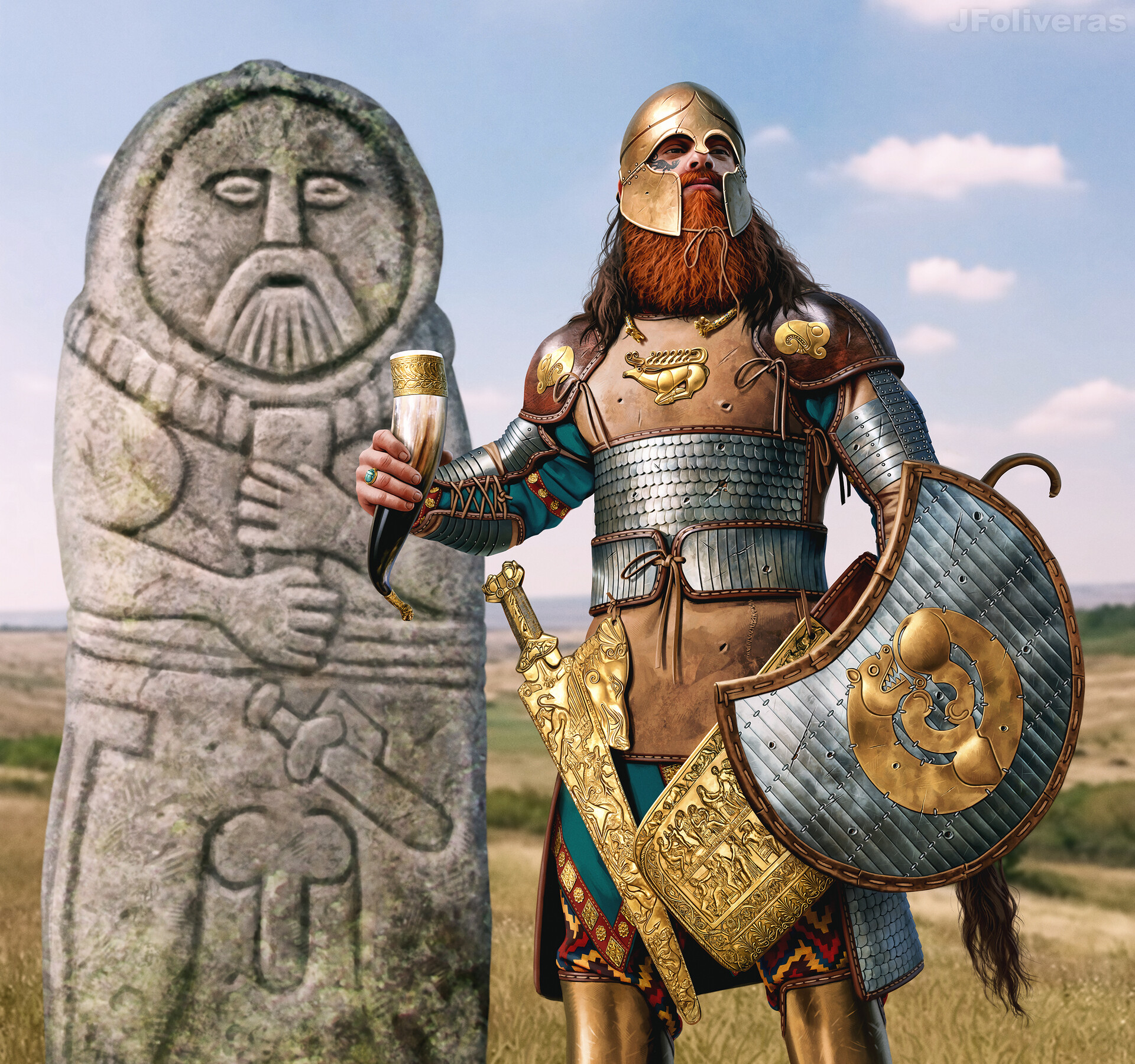
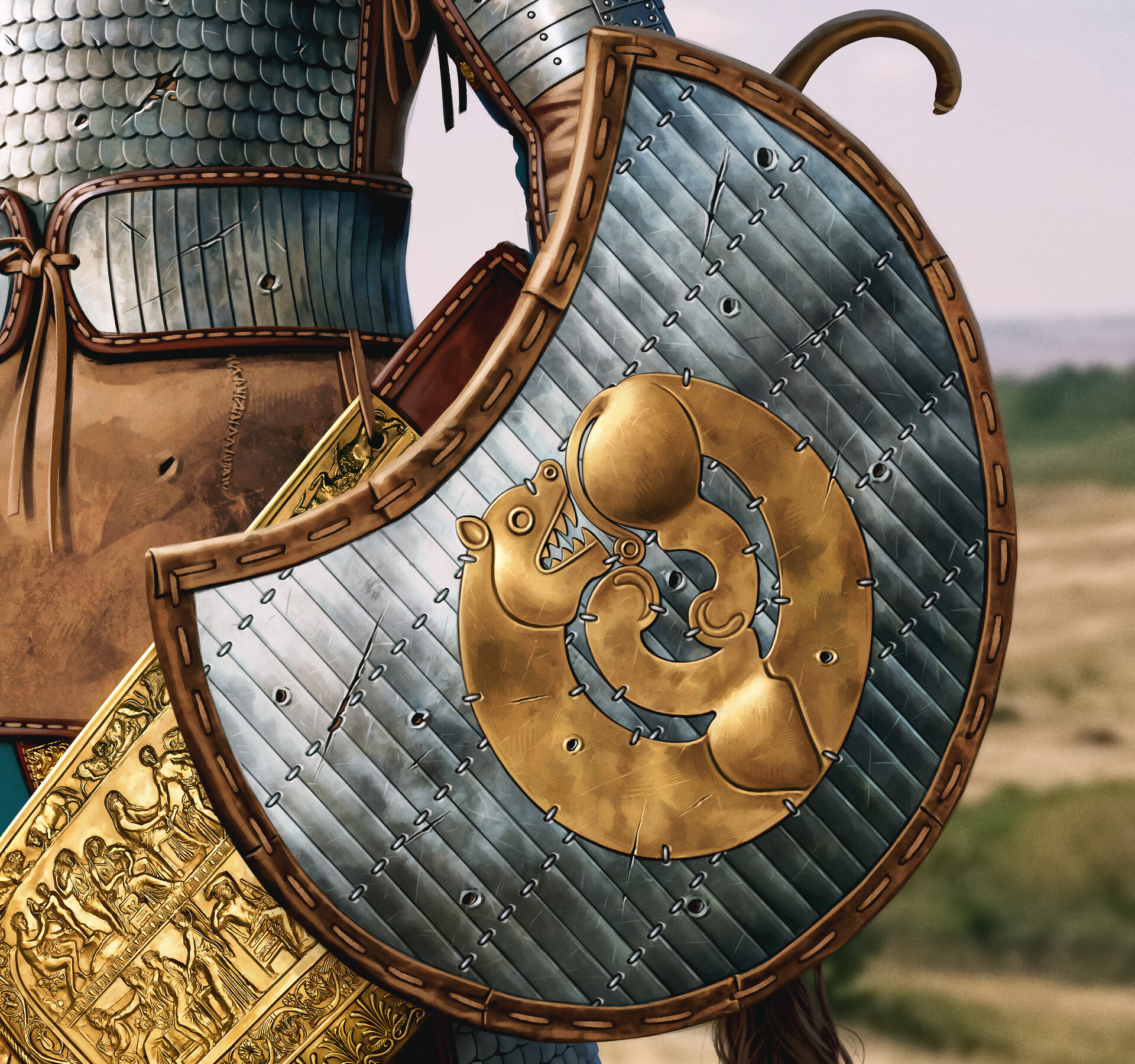
Ateas, king of the Pontic Scythians
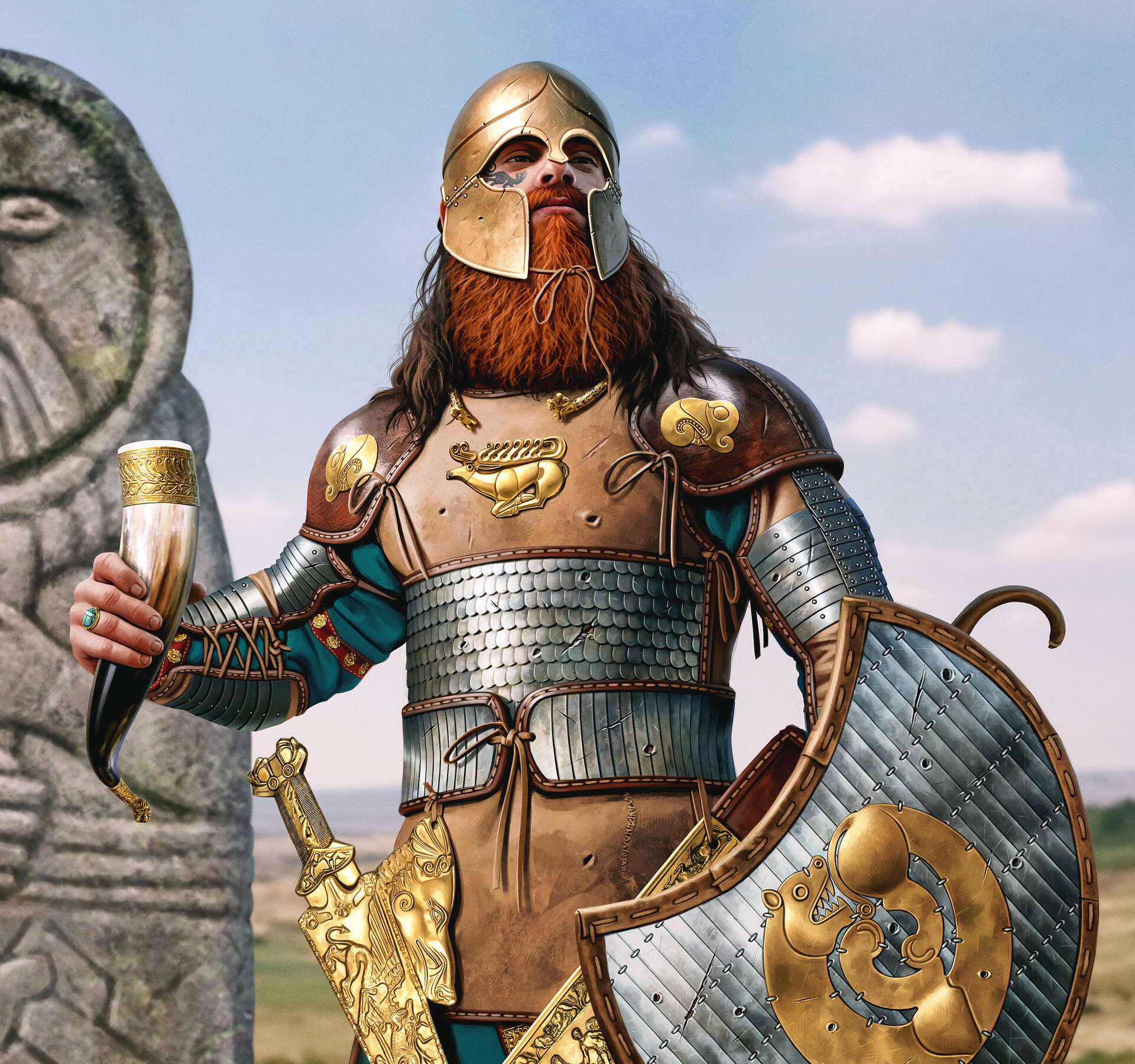
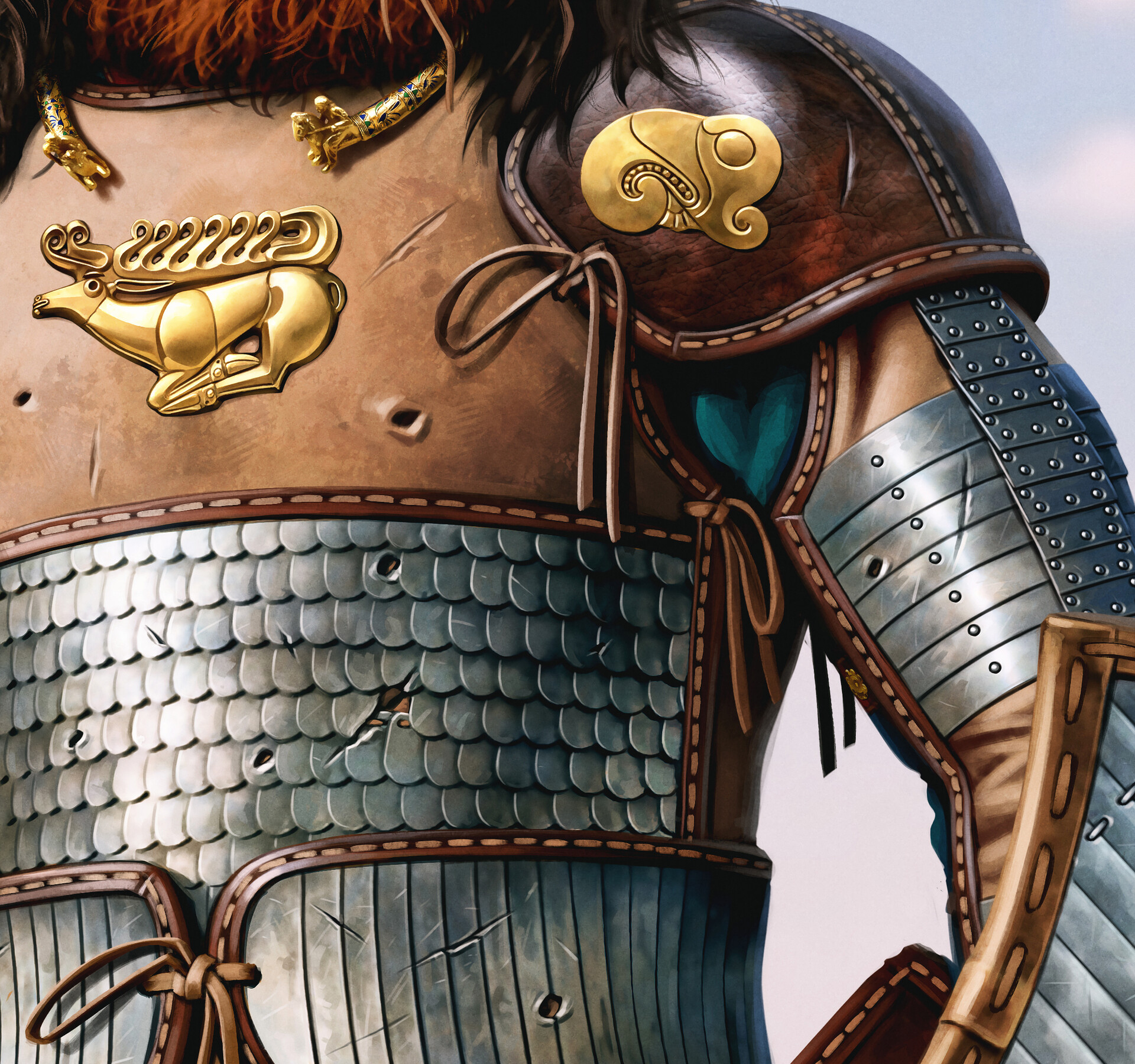
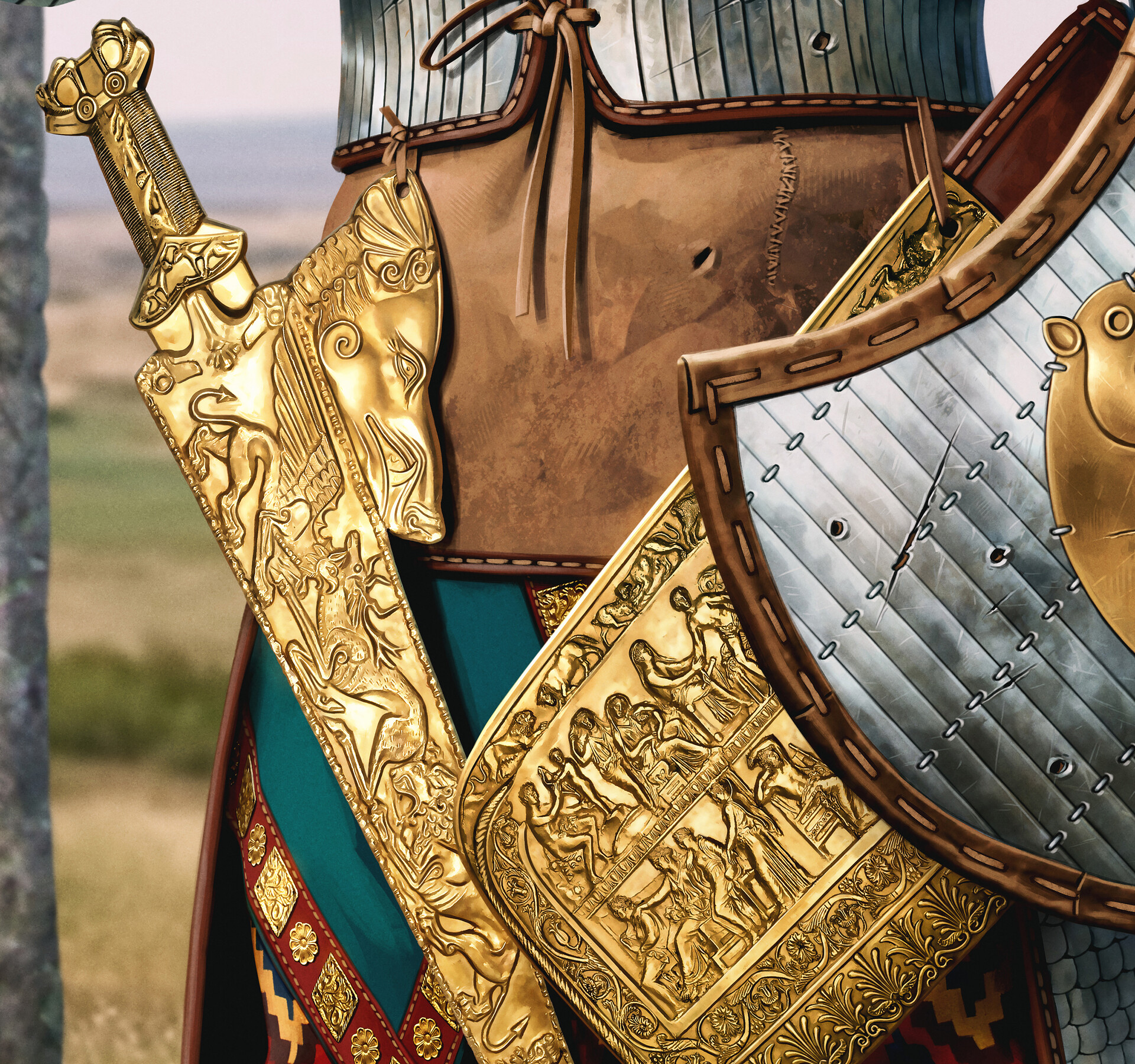
ATEAS, KING OF THE PONTIC SCYTHIANS, who was defeated in battle by Philip II of Macedonia, father of Alexander the Great, in 339 BC. This reconstruction is based on a Scythian stone idol or kurgan stele that represents a warrior in a leather armour with shoulder plates, reinforced with iron scales and overlapping iron bands rivetted to leather sleeves (for which there are matching archaeological finds near Kyiv). The armour in the stone idol is decorated with golden appliques in the form of a deer and raptor heads. Scythian kurgan stelae also usually represent warriors holding a drinking horn. He covers his head with a Greek helmet of Chalcidian type, and his golden sword scabbard and bow case have been made by the Greek colonists settled at the north of the Black Sea and Crimea. The typology of these golden weapons is Scythian, as well as some of the iconography such as the griffin fighting a lion and a deer, but the style of the decoration is Greek.
The Scythians of the Pontic Steppe, also known as the “royal” Scythians or the European Scythians and known to the Persians as “Saka beyond the (Black) Sea”, were the western branch of the Eurasian steppe nomads known in archaeology as the “Scythian horizon”, which extended from the Danube to northern China. The European Scythians inhabited the north of the Black Sea, roughly corresponding to modern-day Ukraine and south-western Russia, and just like their Saka relatives from Central Asia, they spoke an Eastern Iranic language belonging to the same family as Sarmatian, Alanic, Sogdian, Bactrian, and Khotanese, all distantly related with Persian, which belongs to the Western Iranic family. According to the Greek historian Herodotus, the Scythians were usually tall and red-haired, drank the blood of their enemies, ritually inhaled cannabis, flayed the skins of their victims and took their scalps as trophies. There is also some archaeological evidence for tattoos, at least in Siberia. The Scythians were feared by the great empires and civilizations of the time. In the 7th century BC, they invaded the Assyrian Empire and reached as far as pharaonic Egypt.