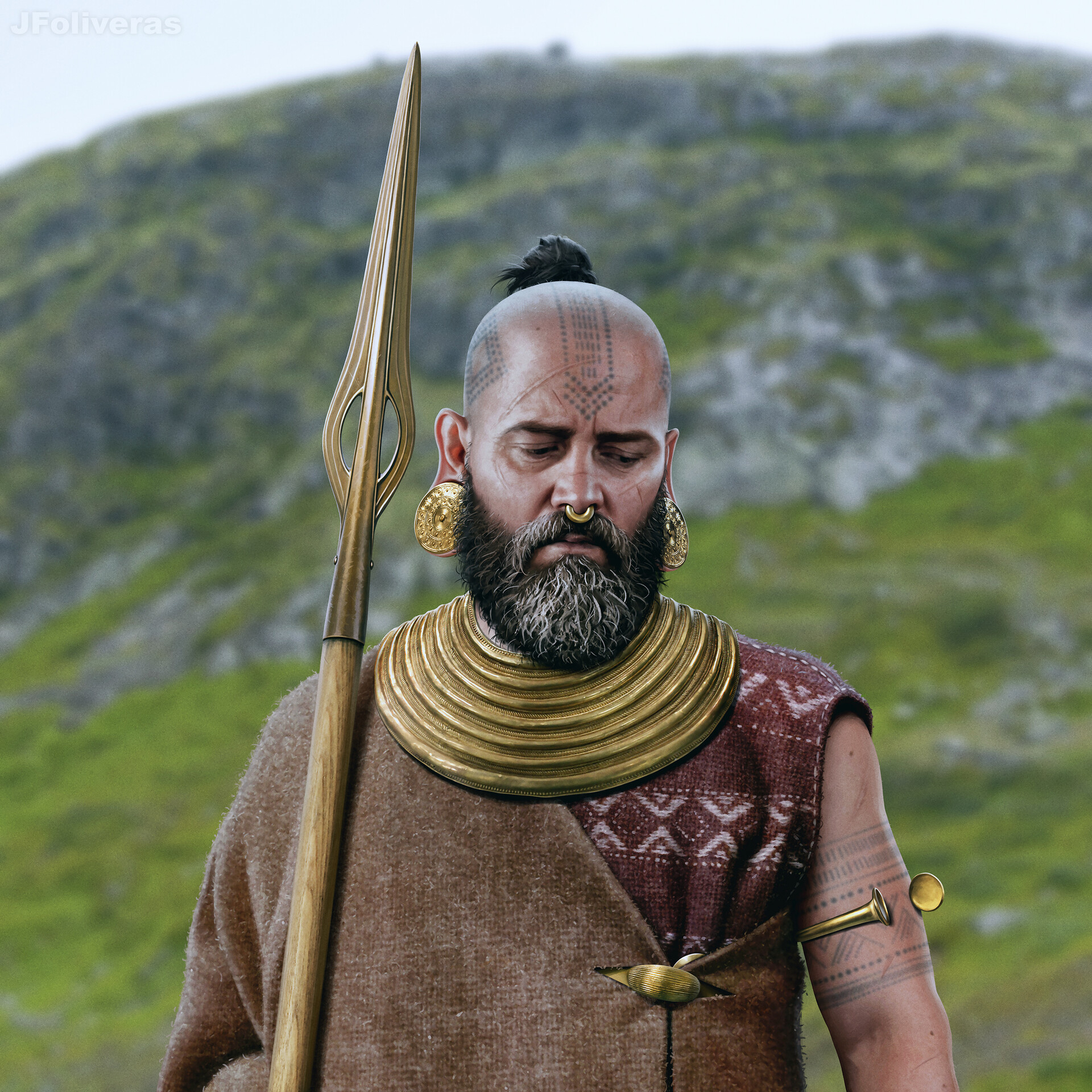
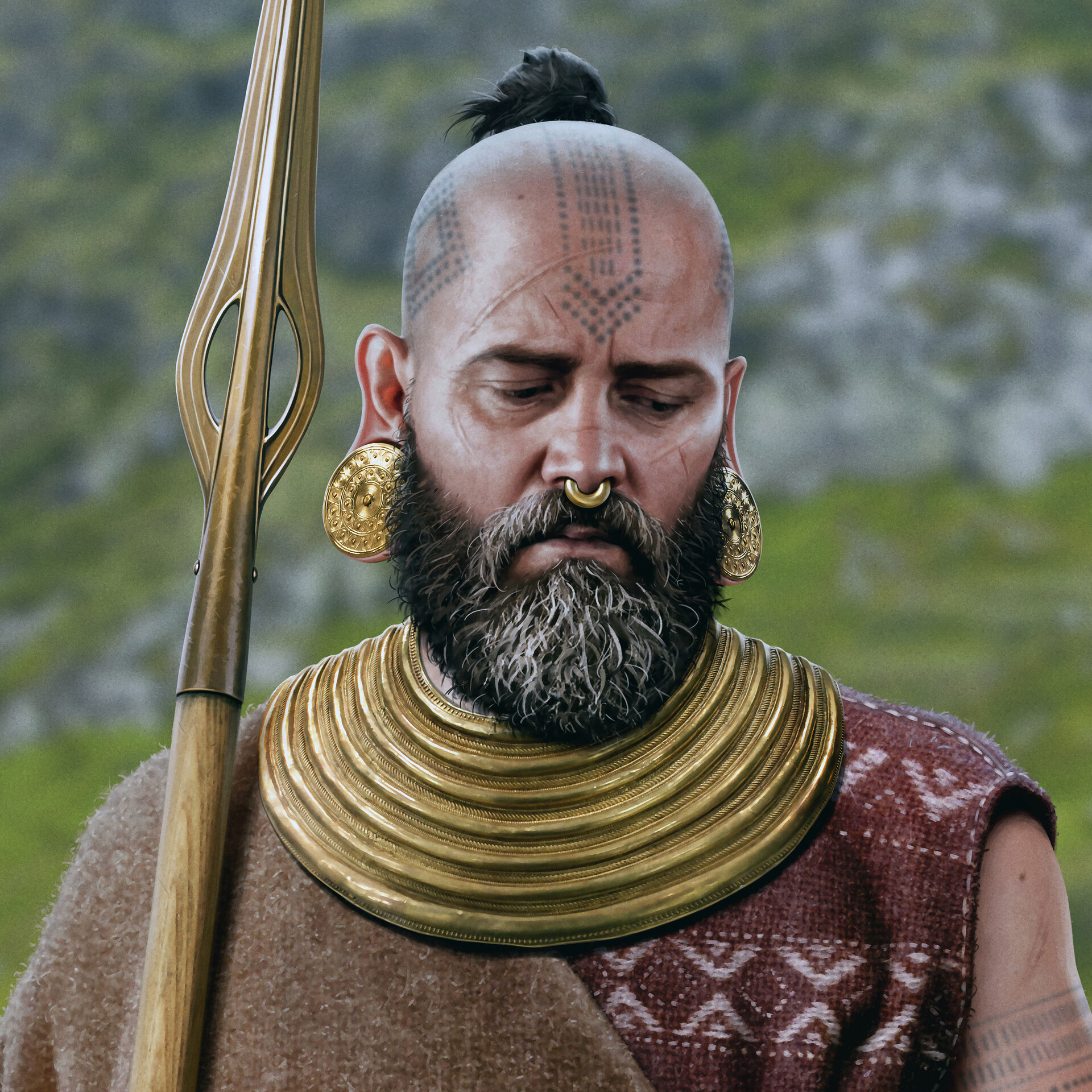
Irish Bronze Age chieftain
LATE BRONZE AGE IRISH CHIEFTAIN. The Bronze Age in Ireland approximately lasted from 2500 BC to 500 BC. The material culture of the British Isles during the Late Bronze Age was part of a wider Atlantic system that extended along the western coast of France to western Spain and Portugal, which was different from the material cultures of the contemporary Nordic Bronze Age and the Urnfield culture of Central Europe and Italy. This chieftain wears a golden collar based on the Gleninsheen gorget and other similar finds. He also wears ear stretchers and bracelets based on several Irish finds. Many small golden rings of uncertain use have been found in Ireland and Britain. It has been suggested that these may be hair ornaments called lock-rings, although the National Museum of Ireland also speculates that these may have been nose rings. The clothes are highly speculative, and his cloak is secured by a type of artifact of unknown use that is common in Ireland. It has been suggested that these artifacts may have been fasteners for clothing. The spear is based on a British find in the MET museum. The tattoos are totally speculative, as the only surviving evidence of tattoos from Prehistoric Europe are those of Ötzi the Iceman (the Copper Age mummy found in the Alps).
You may be wondering, if this chieftain is from Ireland, is he a Celt? Short answer: probably not. Long answer: The ethno-linguistic identity of Bronze Age Ireland is unknown, but if we accept the mainstream hypothesis that Celtic speakers originated in the Alps at the end of the Bronze Age (Hallstatt culture, with a possible Italo-Celtic precursor spoken by people of the Urnfield culture) and expanded into the British Isles during the Iron Age, the population of Ireland and Britain during the Bronze Age would speak a Pre-Celtic, probably Indo-European language, brought to the isles by the Bell Beaker culture of the Early Bronze Age. But there is an alternative hypothesis that suggests Celtic languages may have originated not in the Hallstatt culture of modern-day Austria (the Celticness of which is also a matter of debate), but along the Atlantic coast of Europe during the Bronze Age, including Ireland.