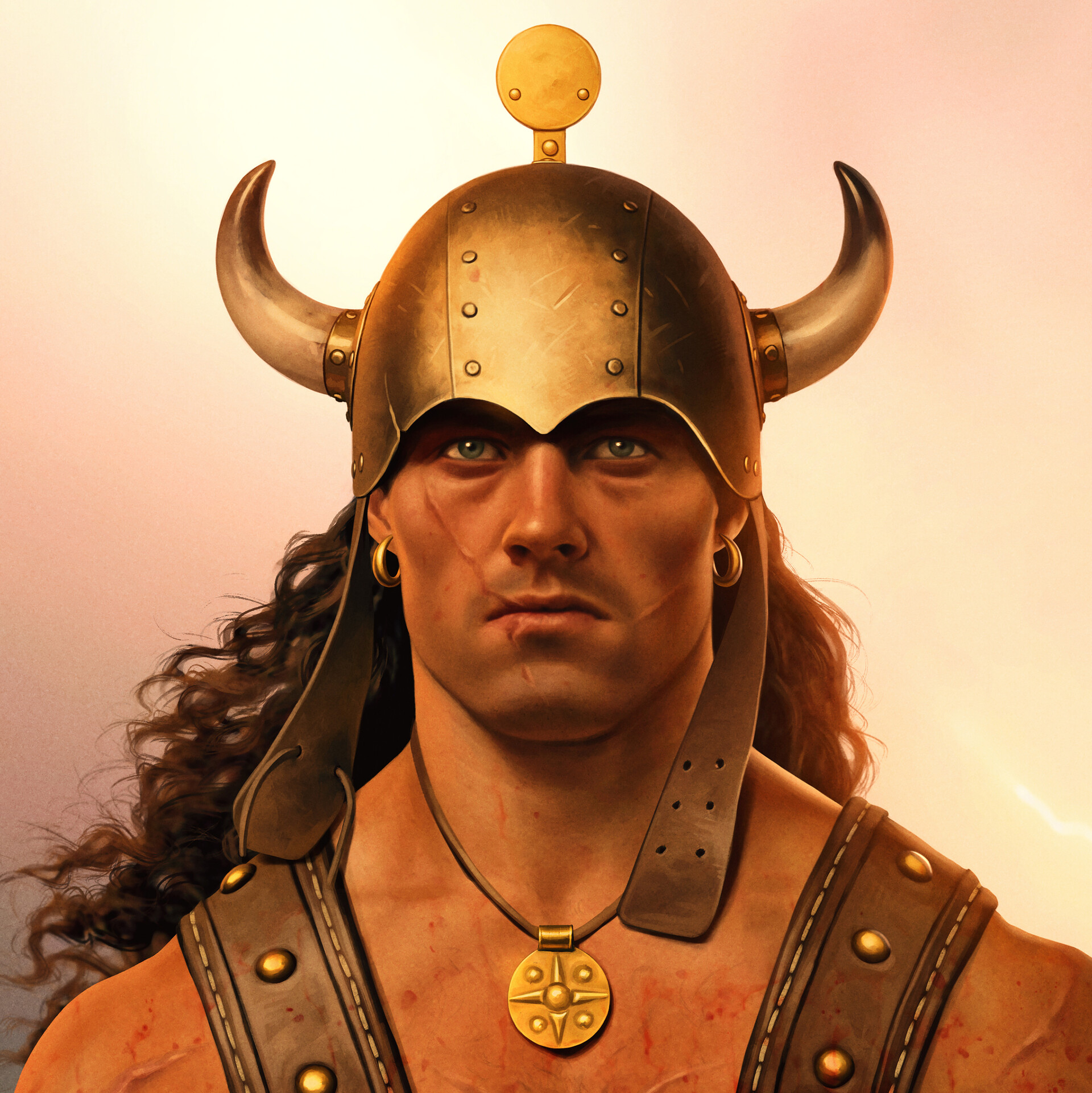
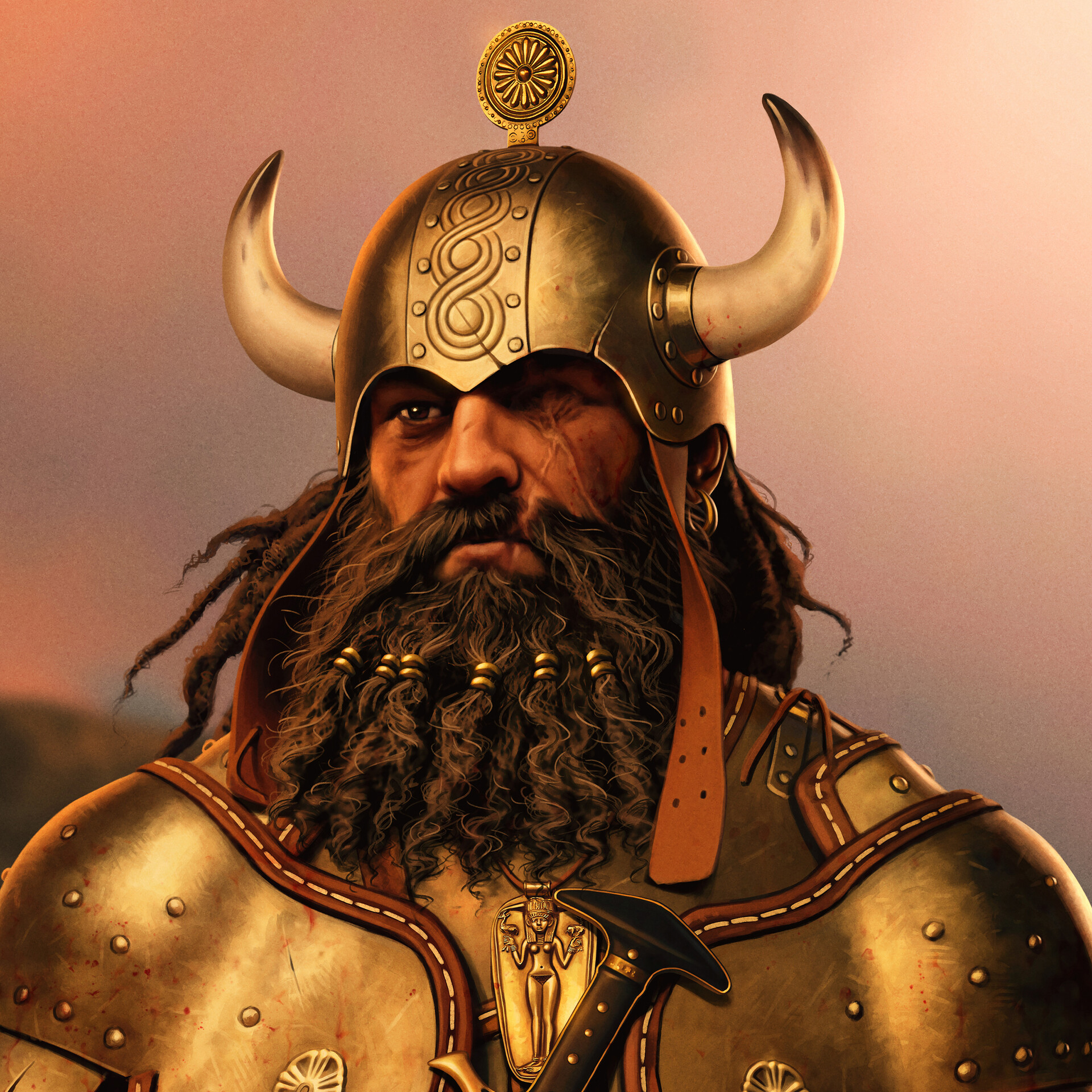
Sherden warriors
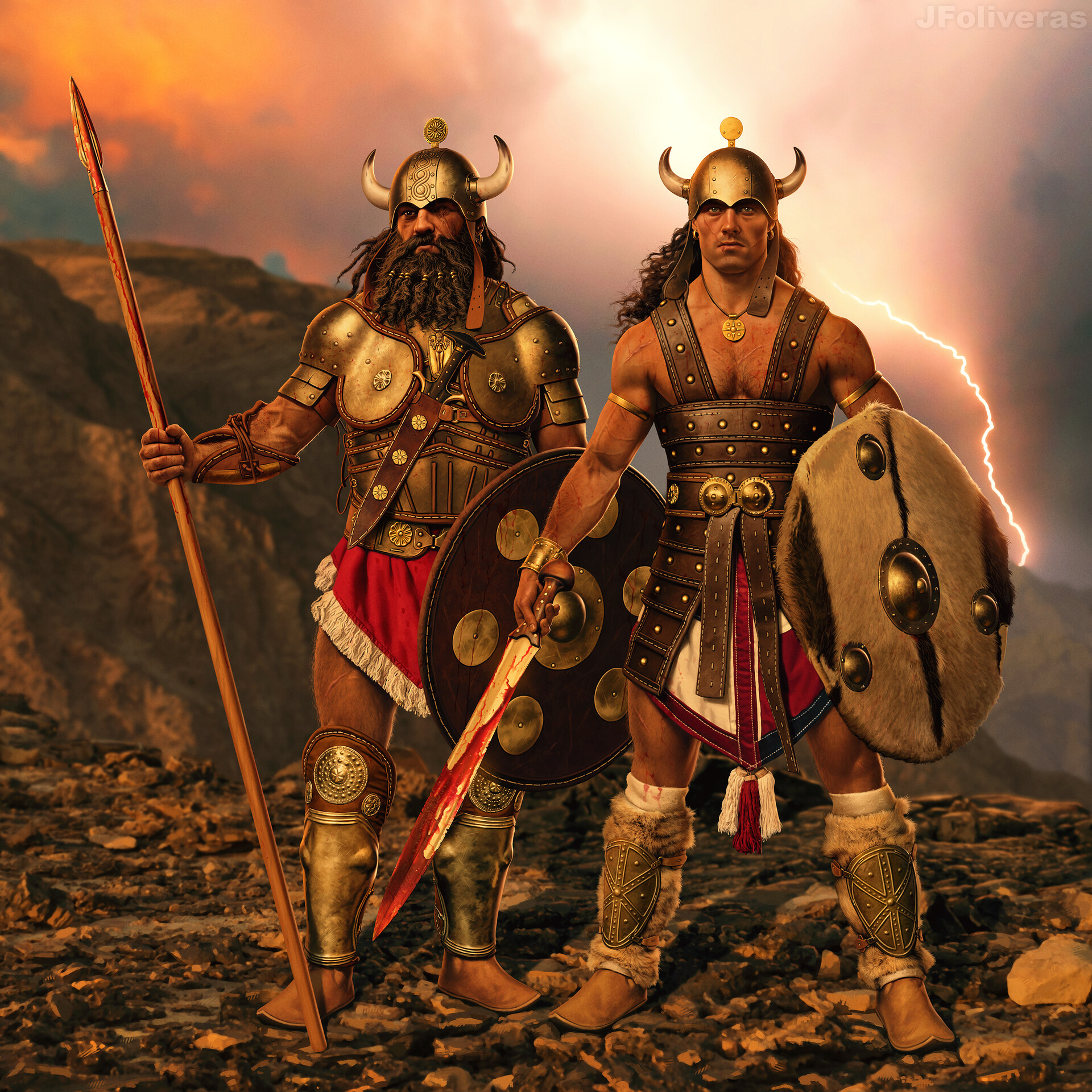
SHERDEN WARRIORS, one of the groups that formed the pirates known as “SEA PEOPLES”, that contributed to the collapse of the LATE BRONZE AGE civilizations of the Eastern Mediterranean (all except Egypt, which successfully repelled them). The Sea Peoples are mostly known from two sources: the Old Testament and the inscriptions on temples made by the Egyptian pharaohs that fought against them, which are Ramesses II, Merneptah and Ramesses III. Ramesses II incorporated Sherden warriors to his own army, adding a Sun disc to their horned helmets. The Egyptian inscriptions credit the Sea Peoples alone for the destruction of the Hittite Empire and Canaan (which brought the Bronze Age to an end in the Middle East, as later civilizations started using more iron), and modern historians have also connected them with the destruction of Mycenaean Greece, but today it is believed that the Sea Peoples themselves were refugees fleeing from calamities in their lands of origin. The origin of the different groups of Sea Peoples has never been known, but based on the little information available, some possible origins have been proposed. It is believed that many of these pirates came from the islands of the Aegean Sea and the coast of Greece and Anatolia, but it is also likely than many came from the Levant. The Sherden, with their characteristic horned helmets, seem to be related with the island of Sardinia (and maybe also Corsica), either because they originated in Sardinia or migrated there after being defeated in Egypt and became assimilated by the local Nuragic population. The Peleset, another group of Sea Peoples with distinctive feathered helmets, are probably the same people referred to as “Philistines” in the Bible, which invaded Canaan and became enemies of the Israelites. The biblical giant Goliath was a Philistine. The Romans would later name the region of Palestine after them. Some historians have also tried to connect the Sea Peoples with migrations from continental Europe. They used long Naue II swords, which originated in the Alps and spread as far as Norway, Britain, Egypt and Mesopotamia, and Late Mycenaean short swords which were carried on the chest.
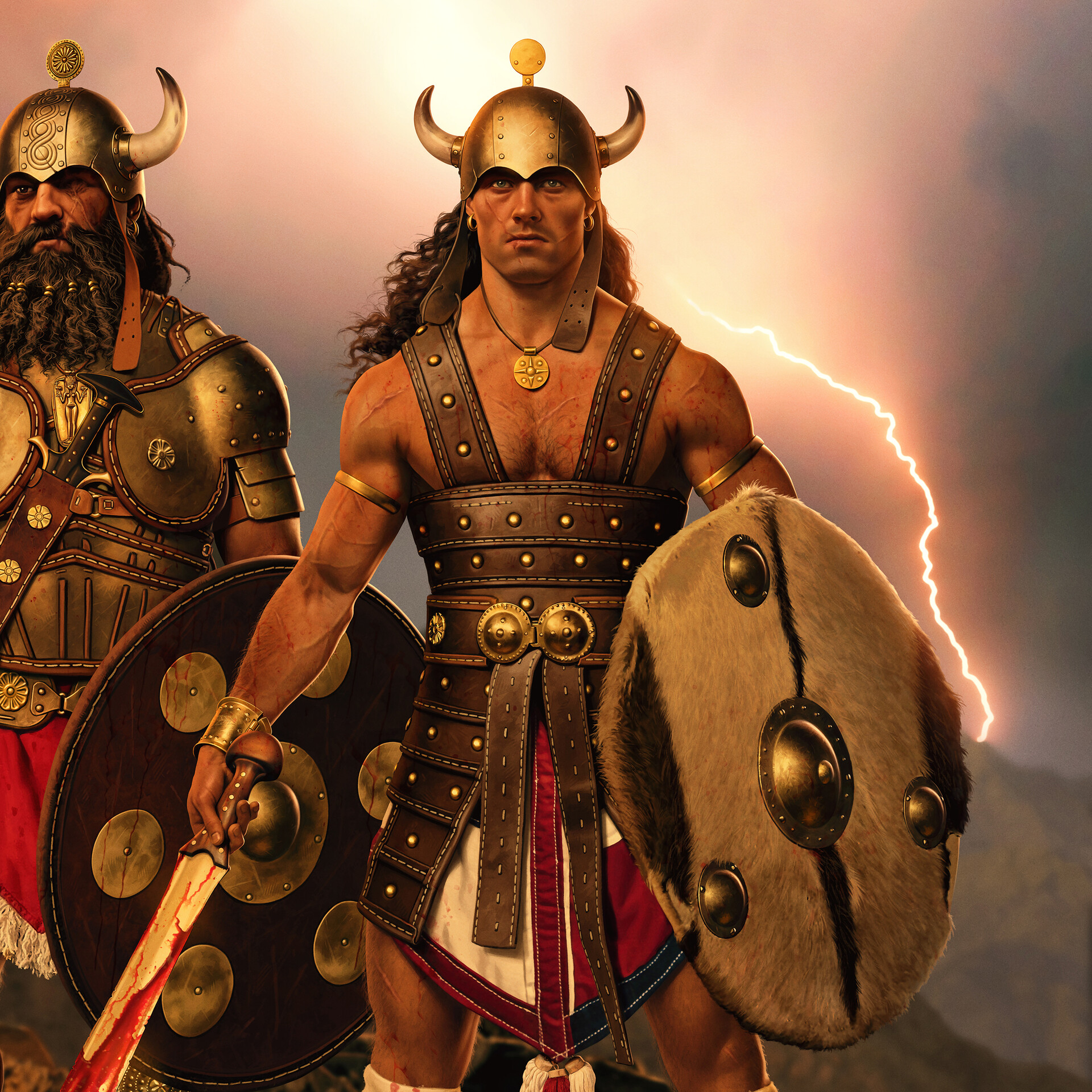
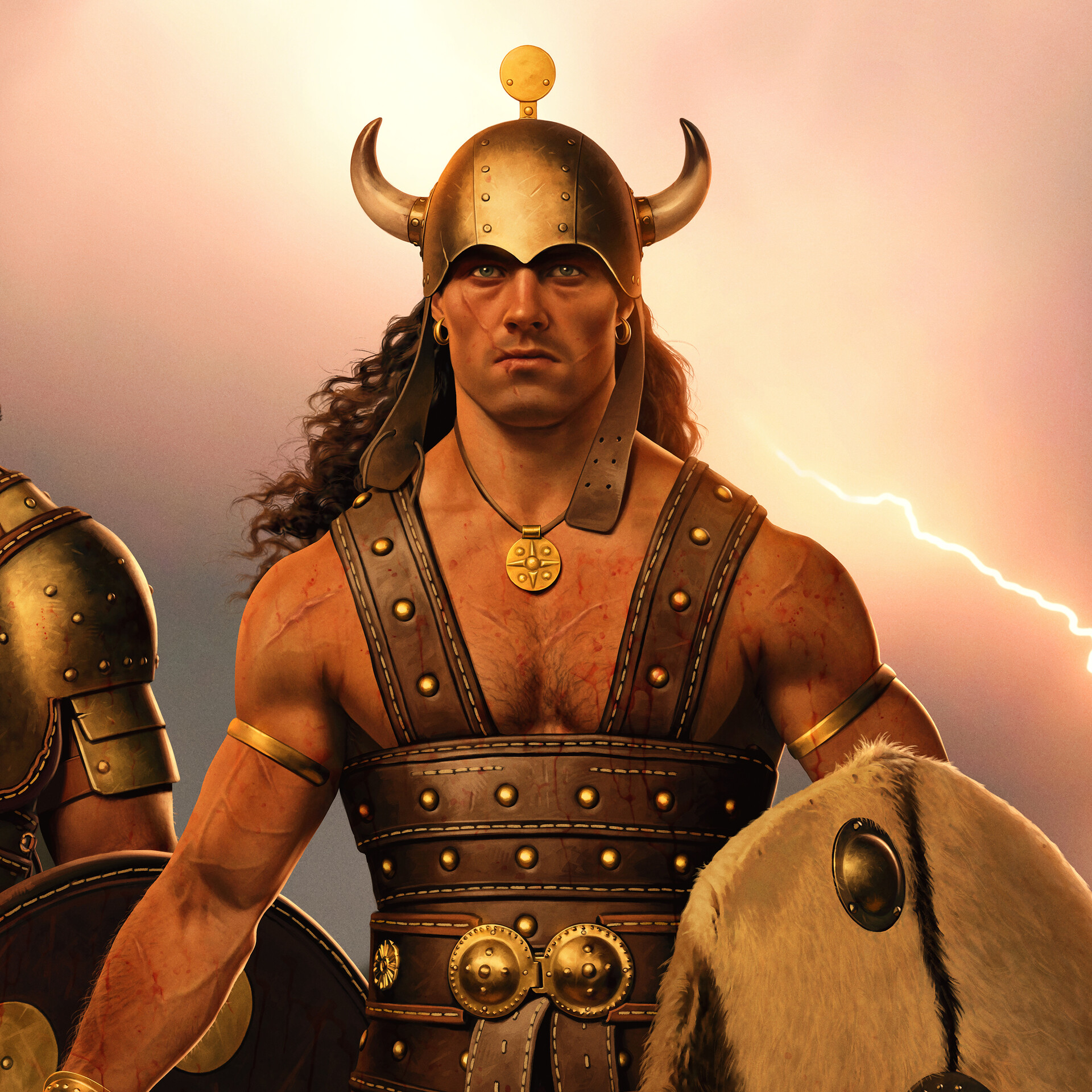
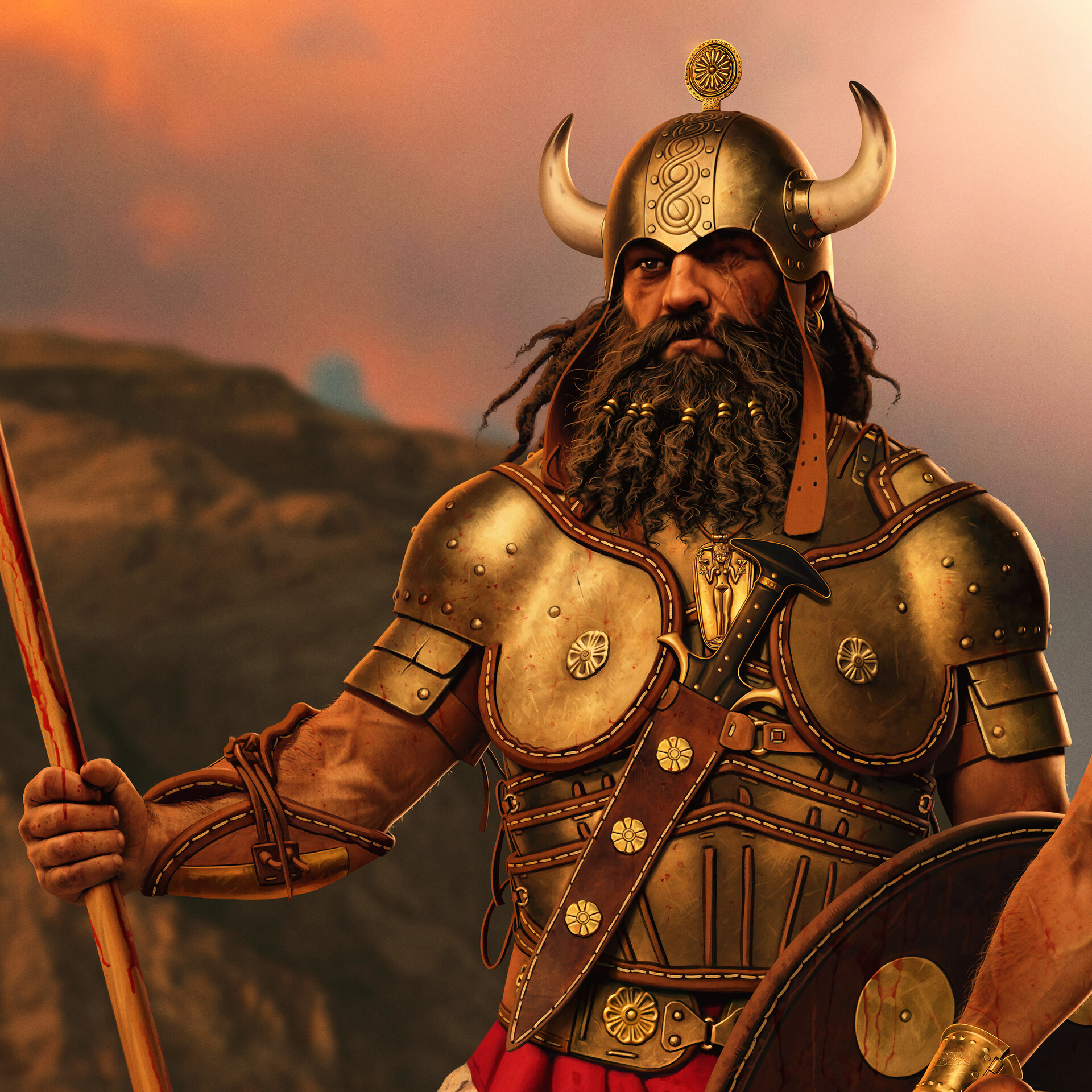
The articulated bronze armour of the warrior on the left and some other elements have been inspired by the amazing reconstructions of Dimitrios Katsikis (Hellenic Armors), based on the Egyptian reliefs of Medinet Habu. The leather armour of the warrior on the right, based on Egyptian representations, as well as the studded shield on the left, are roughly inspired by reconstructions from The Nuragic Foundry. The Naue II and the Late Mycenaean swords, as well as the spear, are replicas of archaeological finds made by Ørjan Engedal (The Bronze Age Warrior Series).
Egyptian representations of the Sea Peoples also usually represent them wearing jewellery, such as earrings, bracelets, and round medallions around their necks. Golden medallions matching those worn by the Sea Peoples in Egyptian art have been found in the territories of ancient Canaan. The warrior on the right (with the bronze armour) wears a pendant with a representation of the Canaanite / Phoenician goddess Astarte, based on a find from Tell el-Ajjul, in what is now the Gaza Strip. Egyptian art shows the Sea Peoples either clean-shaven or bearded. For the beard, I’ve gone with a Hittite-like style consisting of curls or locks, like West Asian fashions of the Bronze and Iron ages.