Blemmye
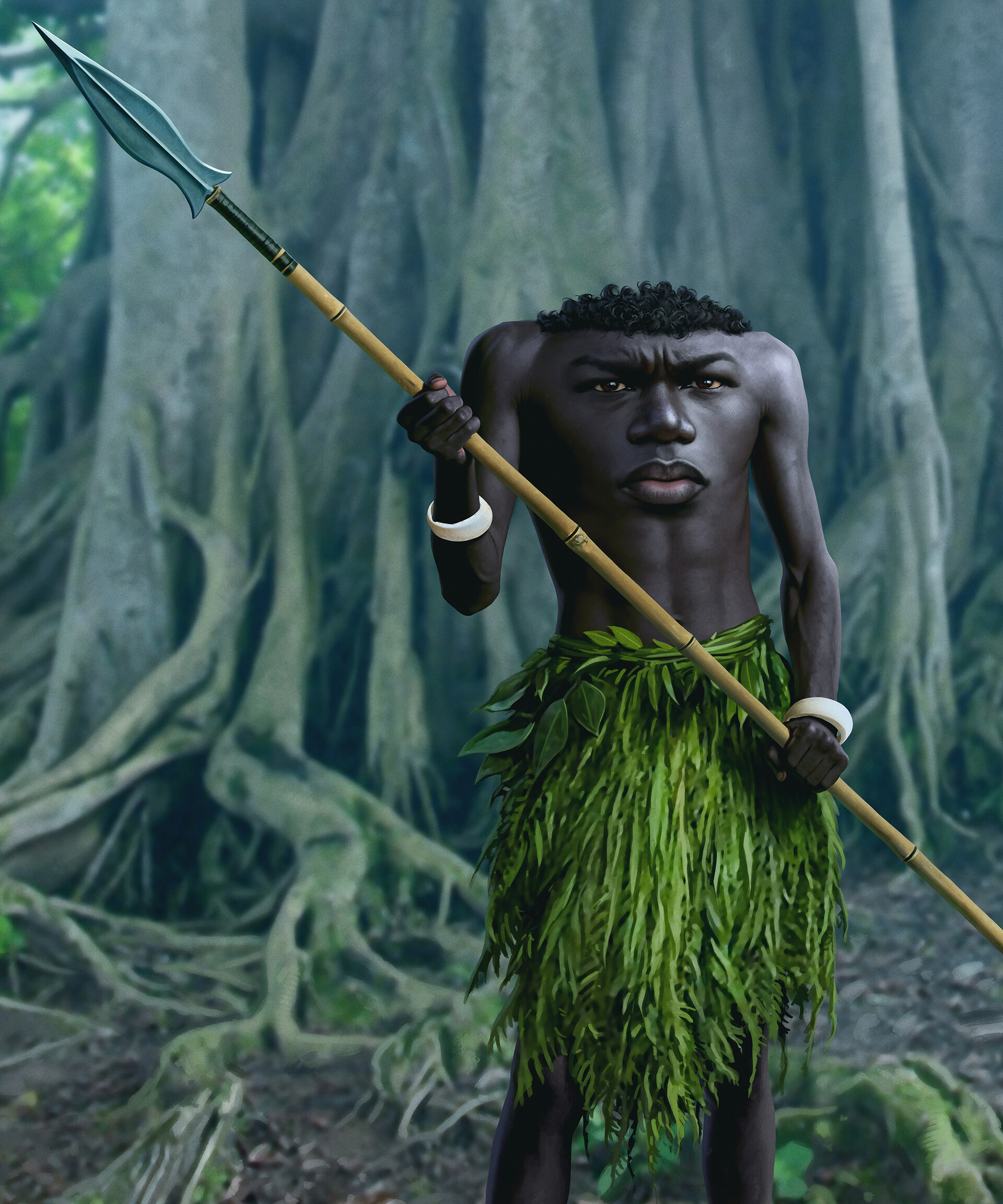
THE BLEMMYES, headless men with facial features on their chest from Greek mythology, that were believed to live as primitive tribes at the edges of the world, especially in “Aethiopia” (Sub-Saharan Africa) and India. Roman authors like Pliny the Elder conflated the headless men from Greek mythology with a real ancient population from modern-day south-eastern Egypt and eastern Sudan, known as Blemmyes (the ancestors of the modern Beja people), so the same name has a double meaning.
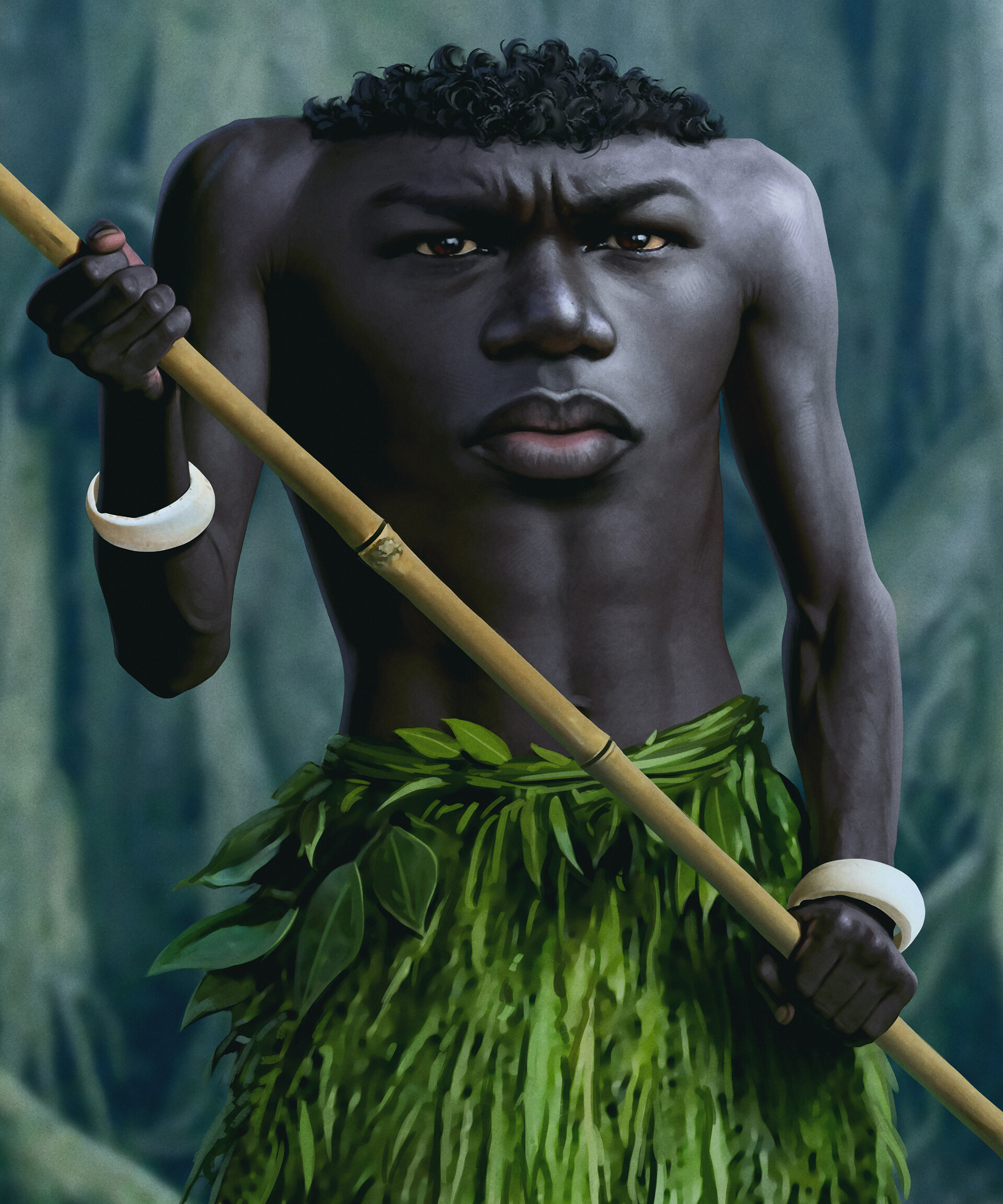
For this illustration I’ve imagined what a Blemmye from India could look like. I imagine these headless creatures as tribal outcasts living in forests and jungles, fully isolated from Indic urban civilization since the dawn of time, so, instead of the appearance of a modern north Indian, I tried to give him aboriginal AASI physical features (the Indian subgroup of the earliest anatomically modern humans that migrated from Africa into Asia, that later mixed with successive migrations from the Iranian Plateau and the Eurasian Steppe). The spear is mostly based on a stone relief from the Sanchi Stupa that depicts a Shunga period warrior (2nd century BC). The primitive grass skirt is based on some representations of what seem to be tribal individuals in the reliefs of the Sanchi Stupa.
The headless men were one of the many mythical creatures that the biographers of Alexander the Great claimed to have seen during the military campaign in India, for which they were accused of lying by the Roman geographer Strabo. Centuries after the rise of Christianity, these headless men, like many other creatures from Greco-Roman mythology, became assimilated into Medieval European folklore and are often represented in Medieval manuscripts and art. The set of legends known as the “Alexander romance” also feature an encounter between the Macedonian conqueror and a group of headless men.
Mythical creatures very similar to the Blemmyes also exist in other cultures. The Japanese Dōnotsura, the Chinese Xingtian or the Hindu demon Kabandha are also described as headless humanoids with facial features on their chests, and headless men were also believed to live in the Americas by early European explorers.