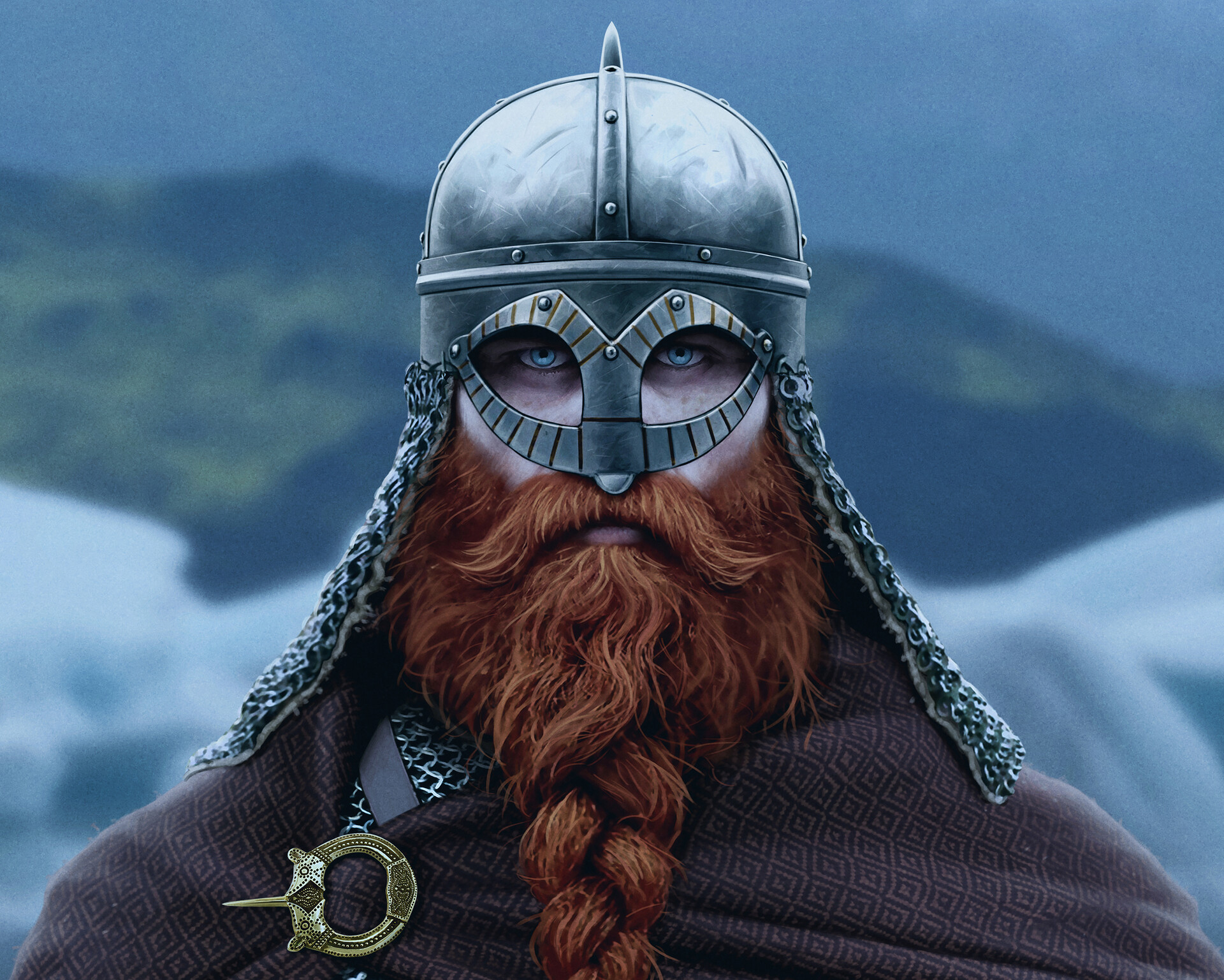
Erik the Red
ERIK THE RED (950 - 1003 AD), was a Viking explorer born in Norway, famous for being the first European settler of Greenland, and his role in the Norse colonization of Iceland, where Erik’s wife Thjodhildr gave birth to the couple’s famous son Leif Eriksson, the Viking explorer that would become the first European to set foot in the American continent, 500 years before Columbus, settling in what is now Canada’s Newfoundland island (called “Vinland” by the Norse). Unlike his wife and his son, who converted to Christianity, Erik remained a pagan. When Erik the Red reached and colonized southern Greenland, the current Inuit population had not reached the island yet, but earlier Paleo-Eskimo populations had been occasionally visiting northern Greenland from the Canadian Arctic for millennia. The Norse may have had some sporadic contact with the Pre-Inuit Dorset culture, although the indigenous inhabitants of Vinland, called “Skraeling” in the Icelandic sagas, were more likely the ancestors of the later Algonquian-speaking Beothuk. The Norse brought agriculture to southern Greenland during the Medieval Warm Period, and their settlement survived long after the end of the Viking Age, until the Little Ice Age caused their agricultural society to collapse, around the same time when the Inuit hunter-gatherers started their migration into northern Greenland from the Canadian Arctic.
Reconstruction elements:
- Helmet from Gjermundbu, Norway, dated 950-975 AD.
- Sword from Gjermundbu, same tomb as the helmet (using replicas by Dima Hramstov and Hopkins Forge for the handle, and scabbard chape by Northan).
- M1 type two-handed axe, possibly a bit risky here, because the iconic Viking two-handed axe only appeared towards the end of the 10th century and peaked in the 11th century. Unlike modern halberd-sized “Dane axes” used in combat reenactment, the historical ones had a much shorter shaft.
- Brooch from Rogaland, 10th century Norway (replica by Danegeld).
- Main belt buckle and strap end from Tomberg, Norway (replica by Fenrir’S).
- Sword suspension buckle from Frøyland, Norway (replica by Armatae).
- Pouch from Bringsvær, Norway, late 10th century (on Erik’s right, over the knife).
- Pouch from Hedeby, German part of Jutland (on Erik’s left).
- Boots from Oseberg, Norway, 9th century.
- Trousers from Thorsberg, German part of Jutland, 300 AD.
- Bracelet from the Cuerdale Hoard, early 10th century Viking England.
- Braided beard and curled moustache based on a figurine found in Denmark, with two highly hypothetical glass beads after finds of one or two such beads around the neck area in male burials.