Early Germanic warriors
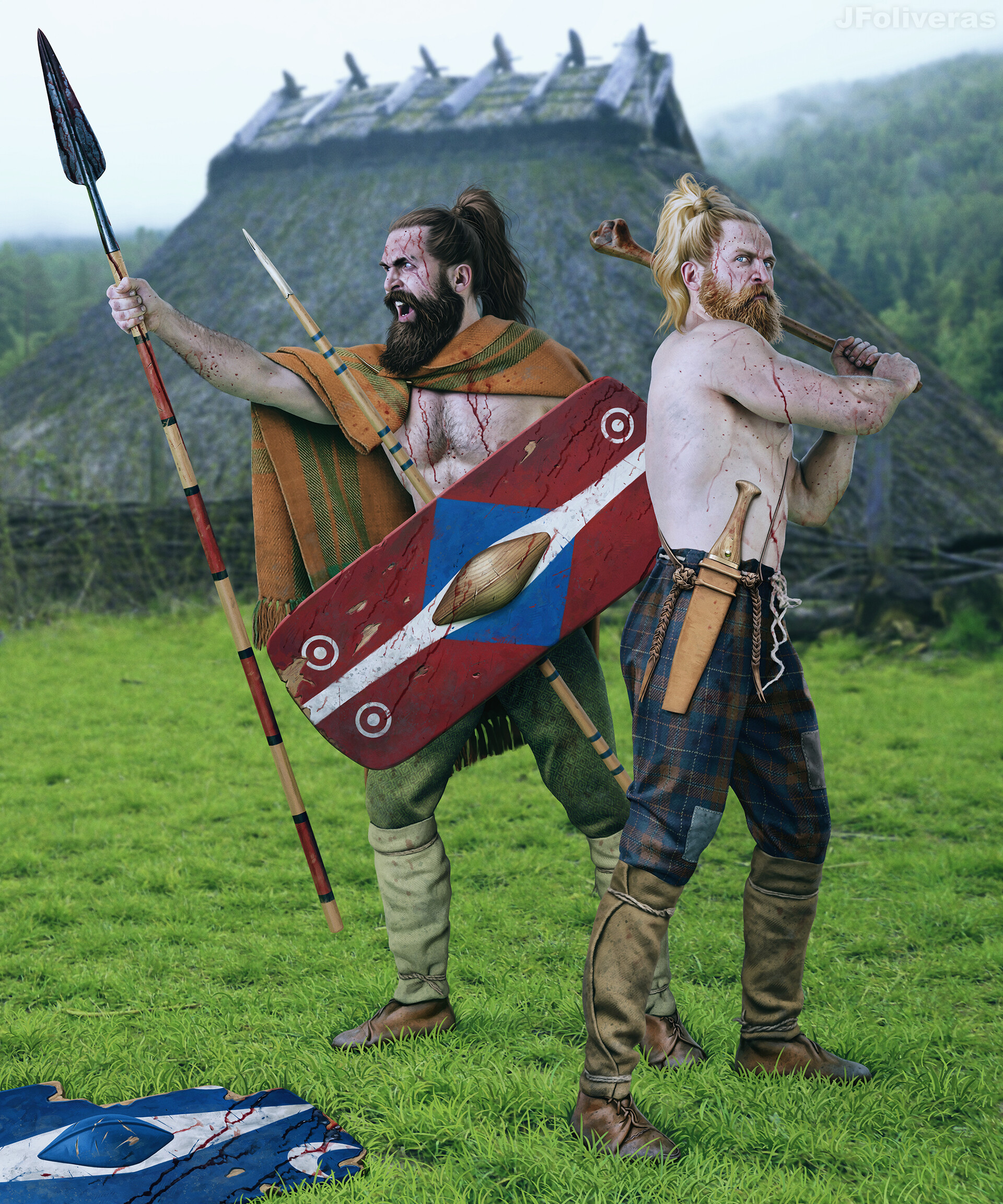
EARLY GERMANIC WARRIORS of the Pre-Roman Iron Age (6th century BC – 1st century BC), known by archaeologists as the Jastorf culture, which followed the Nordic Bronze Age and preceded the Roman Iron Age (called this way because of the introduction of Roman influences and imported Roman objects among the Germanic tribes from the 1st century onwards). During the Pre-Roman Iron Age, Celtic influences from the La Tène culture of central and western Europe reached northern Europe. These are the Germanic tribes that the Greek explorer Pytheas of Massalia would have encountered during his journey to northern Europe and the Arctic in the 4th century BC. It’s not clear if these where the inhabitants of Thule because we don’t know the exact location of Pytheas’ Thule, but if Thule was in northern Norway, near the Arctic Circle, the people of Thule would have been Sami hunter-gatherers instead of Germanic tribes. At this time, the Germanic tribes of the Jastorf culture inhabited what is now northern Germany, Denmark, and southern Scandinavia, before their eventual migrations southwards, which resulted in the Cimbrian War against the Roman Republic in the 2nd century BC, and the subsequent conflicts with the Roman Empire during the Common Era.
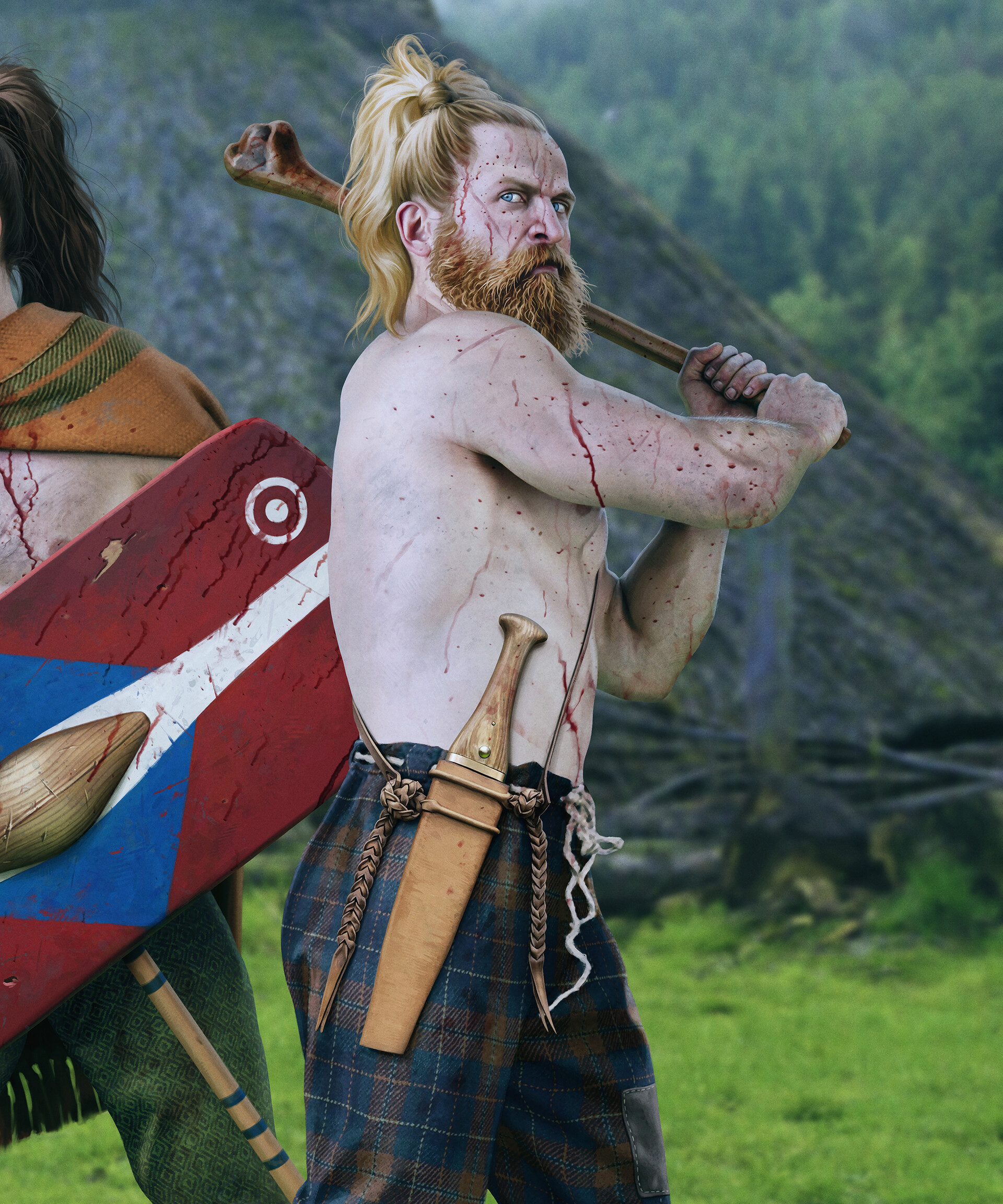
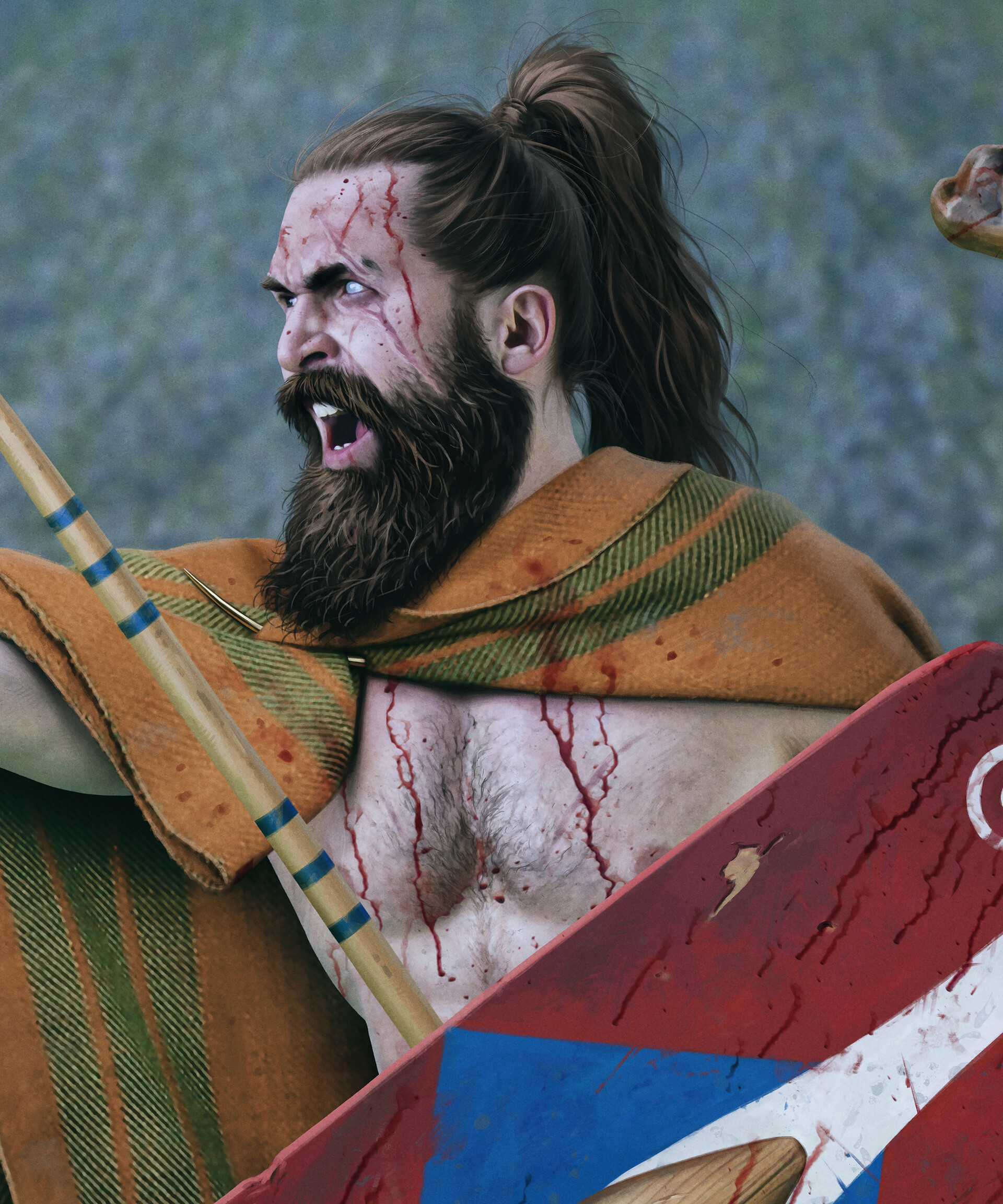
This reconstruction is mostly based on Roman representations of Germanic warriors (often bare-chested), clothes preserved in bog bodies (including leg wraps and shoes from Søgaards Mose), and the weapons found inside the Hjortspring boat (4th century BC, Denmark), which is an early Iron Age boat of the same type represented in petroglyphs of the Nordic Bronze Age. The weapons from Hjortspring included here are a big iron spearhead, bone-tipped javelins, wooden shields, and a battle knife. I also included a wooden club based on Roman representations of Germanic warriors and several finds from bogs.