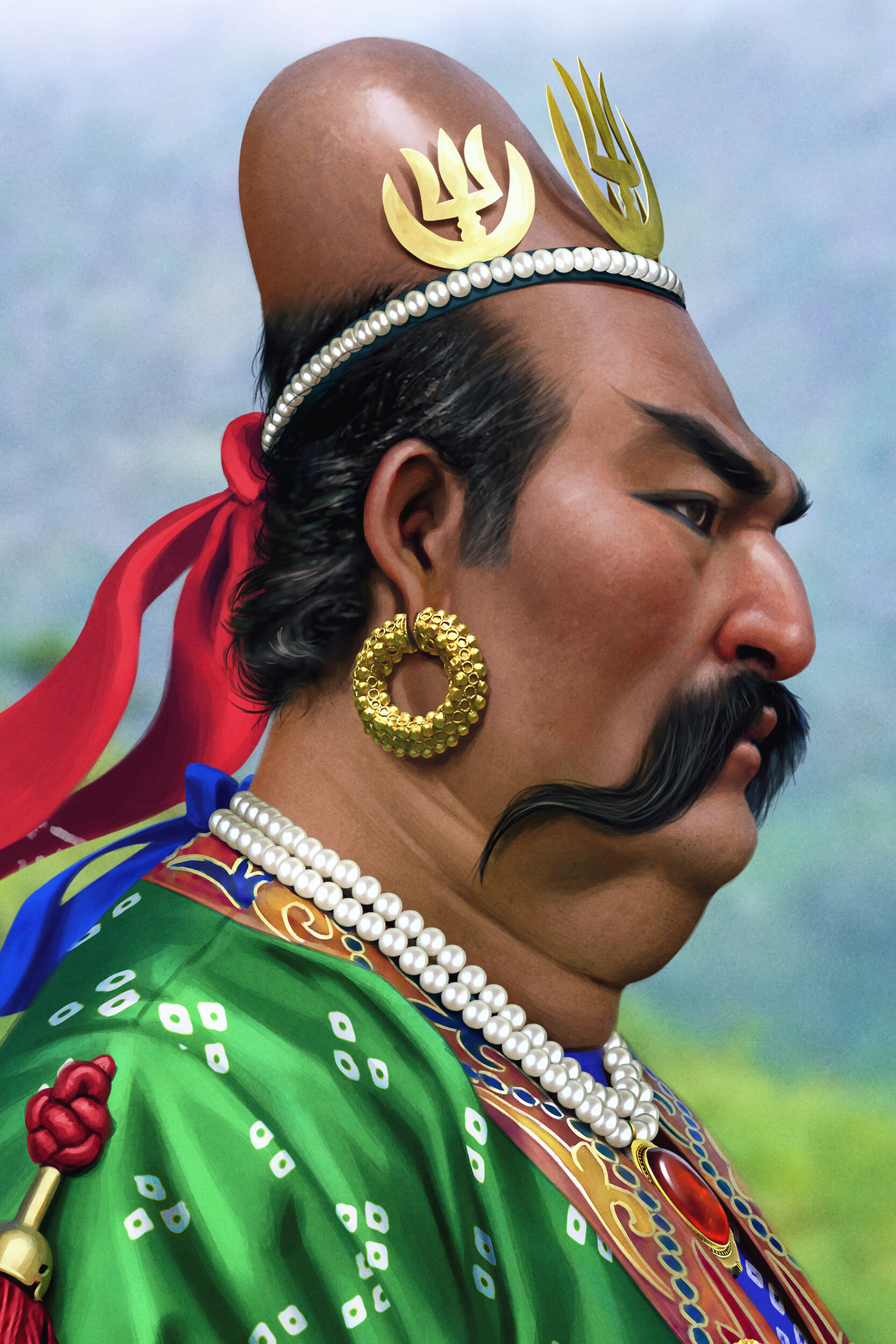
Khingila, king of the Alchon Huns
KHINGILA, first known king of the Alchon Huns, ruler of northwest India from 430 to 490 AD. Reconstruction based on the coinage of the Alchon Huns, featuring artificial skull elongation (a form of extreme body modification also practiced by the European Huns) and a diadem with Sasanian-style crescents combined with Indian tridents, tied at the back with ribbons. The coat, open in front, is based on Sasanian and Kushan examples, and is decorated with an ancient Indian tie-dye technique called bandhani. The tassels on the shoulders are based on Alchon coinage, as well as a find from the Tarim Basin. He is holding a lotus in imitation of the image of an Alchon ruler in the Chilek silver bowl, originally made in India but found near Samarkand.
THE ALCHONS were one of the dynasties or clans of the eastern Huns, the steppe nomads known as “Hunas” in ancient Indian inscriptions, distantly related with the Huns of Europe that invaded the Roman Empire under the leadership of Attila, penetrating as far west as northern Gaul (modern-day northern France), triggering the Germanic invasions and contributing to the fall of Rome. The first Huns that invaded India from Central Asia were the Kidarites in the first half of the 5th century, but the Kidarites were finally defeated simultaneously by the Guptas of India and the Sassanids of Persia, the later with the help of another Hunnic people that would later take control of Central Asia: The Hephthalites. In northwest India, the power vacuum left by the Kidarites was seized by the Alchons, that were initially settled in Bactria. One of the Alchon kings, Toramana, conquered a large part of the Indo-Gangetic Plain and central India from the Guptas, as evidenced by the large number of inscriptions commemorating his victories over the Gupta armies and proclaiming him as “great king of kings”. Regarding their religion, the Hunas were originally animistic, but they probably supported Buddhism, the Vedic religion (Hinduism) and Zoroastrianism as well.